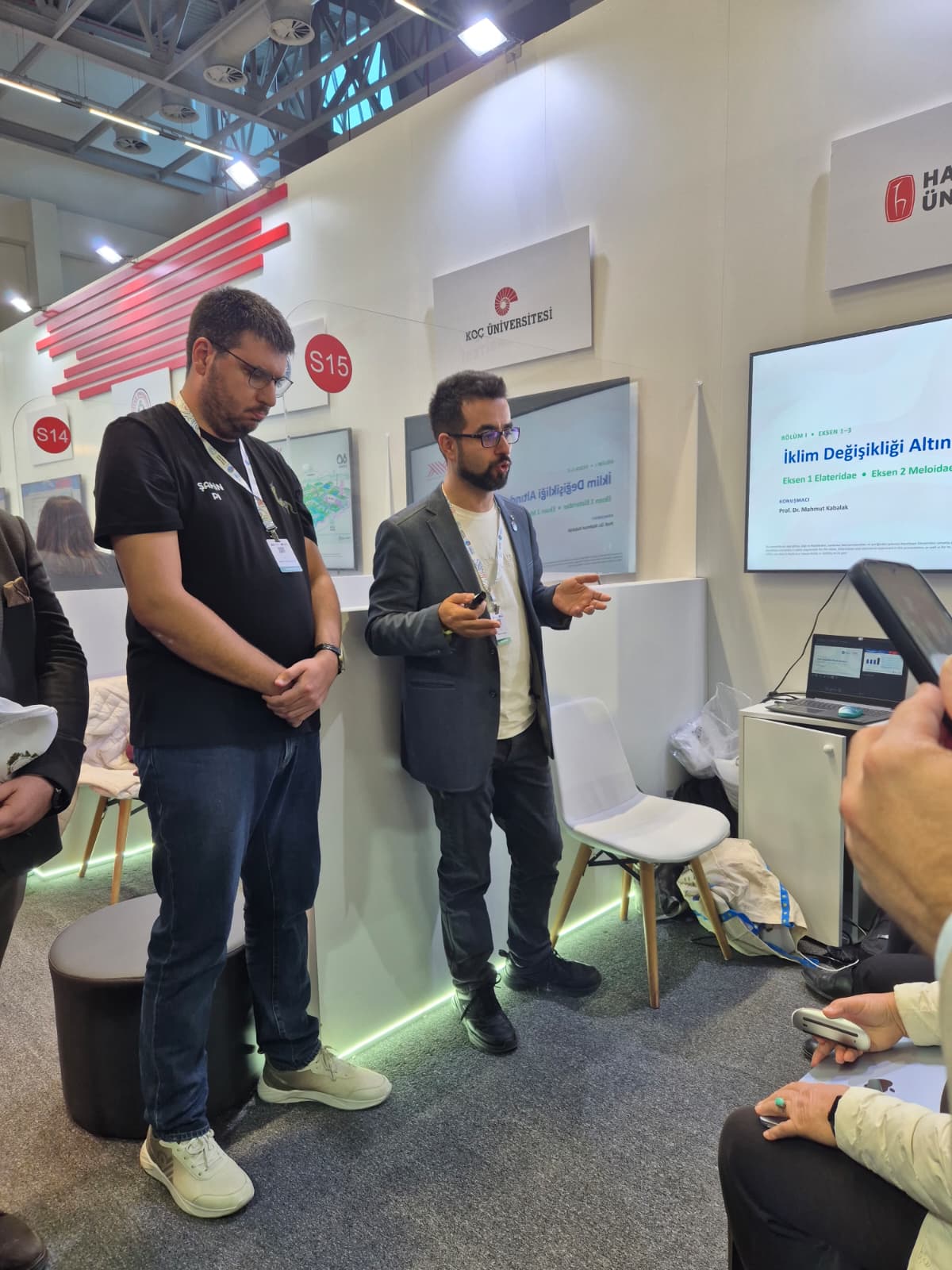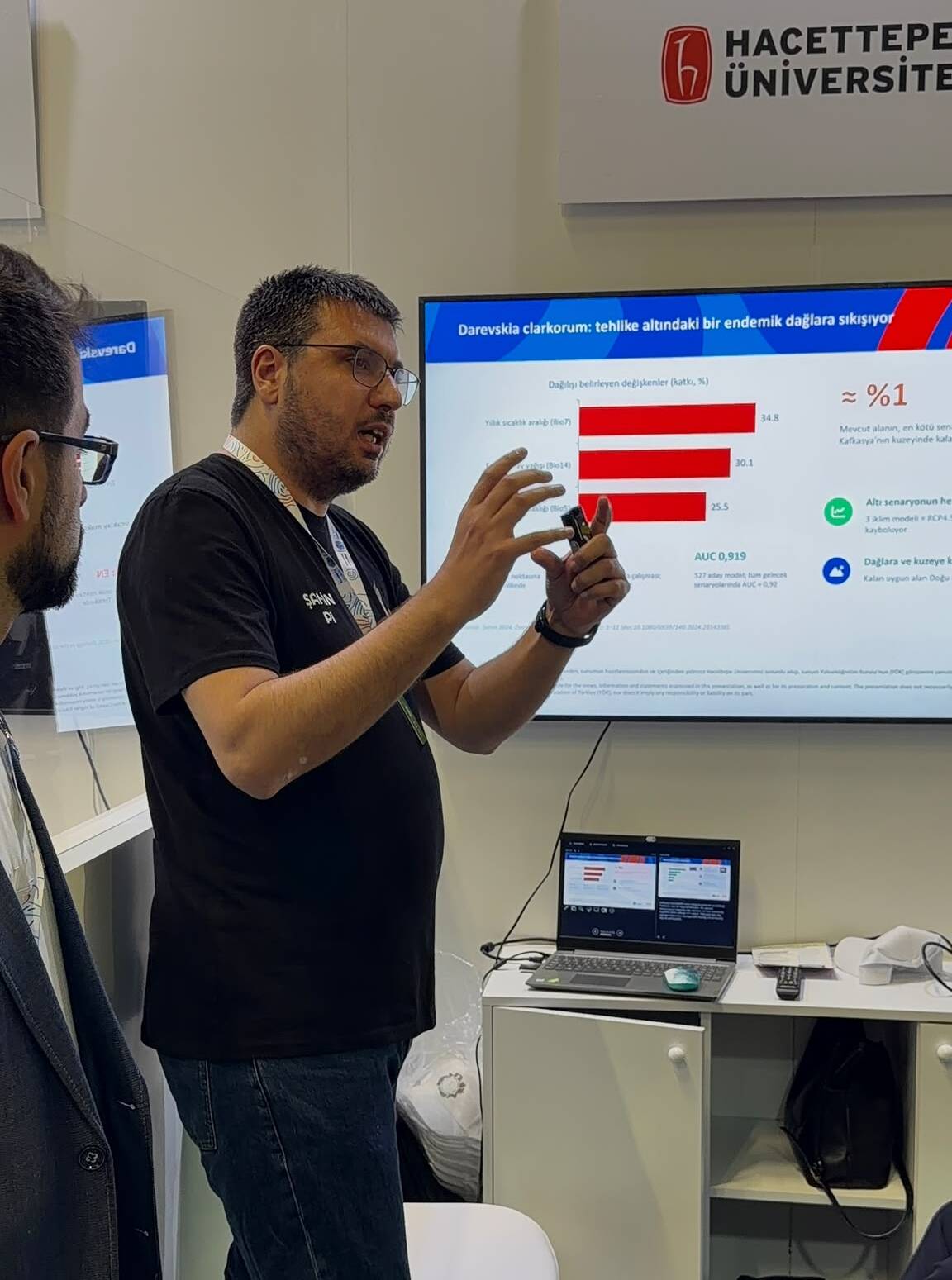
The study presented by our University’s Department of Biology team at COP31 revealed that less than 1% of climate refugia lie within national park boundaries, highlighting the need for conservation planning to include these areas to protect species.
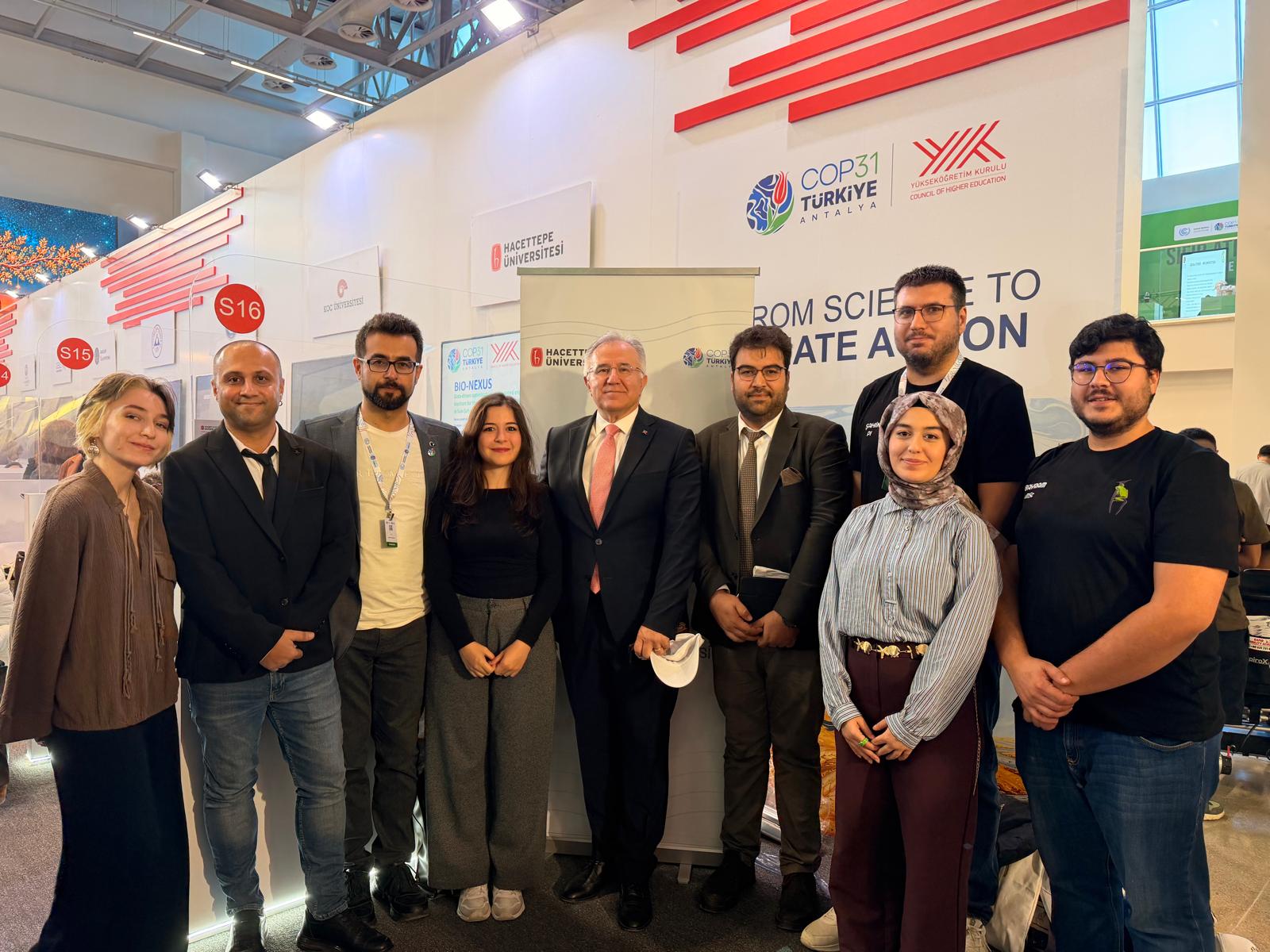
The team from Hacettepe University’s Faculty of Science, Department of Biology, presented its study titled “Anatolian Biodiversity Under Climate Change: From Species Data to Conservation Decisions” (Project 13) at the UN Climate Change Conference (COP31) in Antalya on 15 November 2026. The presentation was delivered at the Hacettepe University stand in the “From Science to Climate Action” area of the Council of Higher Education (CoHE).
The following information about the study was shared by its principal investigator, Prof. Dr. Mahmut Kabalak, and Assoc. Prof. Dr. Mehmet Kürşat Şahin:
“The study focuses on four main groups: click beetles (Elateridae), blister beetles (Meloidae), pollinators, and reptiles. Research on the jewel beetle (Buprestidae), soldier beetle (Cantharidae), checkered beetle (Cleridae), and ladybird beetle (Coccinellidae) families also supports these research areas.
The key finding presented was the mismatch between areas where species can seek refuge from climate change and existing protected areas. In a nationwide analysis of eight blister beetle species, the team identified approximately 81,000 km² of climate refugia, corresponding to 10.7% of Türkiye’s territory, that are projected to remain suitable for at least four species by the end of the century. These refugia are mainly located in the mountains of Northwestern Anatolia (Domaniç, Eğrigöz, Murat, and Türkmen), the Sakarya–Bolu forests, and the mountains of the Central Black Sea region. However, less than 1% of these areas fall within national park boundaries. The team also mapped potential habitat corridors that could connect these refugia to one another and to the nearest national parks.
The first part of the presentation focused on insects and shared findings based on a database compiled through the team’s extensive fieldwork over many years. The results indicate that suitable habitats for all click beetle species modelled under TÜBİTAK-funded project No. 118Z772 are expected to shrink by 2050 and 2070. For blister beetles, all eight species examined under the high-emissions scenario were found to lose habitat, with suitable areas shifting more than 300 metres towards higher elevations. Blister beetles, whose larvae develop in wasp nests, were also considered an indicator group providing insights into the status of pollinators.
The team’s faunistic and zoogeographical studies on the Buprestidae (421 species in Türkiye), Cantharidae (254 species, approximately two-thirds of which are endemic), Cleridae, and Coccinellidae families also form the comparative database for the project. Models developed for Chalcophora detrita, a member of the Buprestidae family whose larvae develop in dead wood, indicate that its distribution range could shrink by 61% by the end of the century under the high-emissions scenario.
The team is continuing this research through its ongoing project No. 125Z378, titled ‘Research on the Meloidae (Coleoptera) Family in the Antalya, Aegean, and Konya Regions of Türkiye’. Within the scope of this project, the blister beetle fauna of these regions will be comprehensively documented for the first time through field studies, geometric morphometric analyses, and molecular phylogenetic analyses. Ecological niche modelling will also be used to identify microhabitats that could serve as refugia against climate change.
A similar picture emerged in the second part of the presentation, which focused on reptiles. Assoc. Prof. Dr. Mehmet Kürşat Şahin stated that, under the worst-case scenario, the endangered rock lizard Darevskia clarkorum, endemic to the Caucasus, could retain only 1% of its current distribution range. He also noted that the distribution of the coin-marked snake (Hemorrhois nummifer), which is also found in Anatolia, could shrink by 90–97% under the high-emissions scenario. Field studies on lizards showed that climate affects living organisms more at the microhabitat level than through large-scale averages. This finding highlights the need to verify in the field the refugia identified as suitable on maps.
The team concluded the presentation with six joint recommendations based on the findings from both research areas. The first recommendation was to plan mountain regions as a network of climate refugia extending beyond national park boundaries. Other recommendations included incorporating vegetation dynamics, such as forest structure, fires, and pest outbreaks, into conservation planning; expanding monitoring beyond species counts; protecting dead wood for saproxylic species; investing in taxonomic capacity; and incorporating thermal evidence into conservation decisions.
Prof. Dr. Mahmut Kabalak commented during the presentation: ‘Our models show that most of the areas where species may seek refuge in the future are not currently protected. Conservation planning needs to take climate change into account and include these mountains and the connections between them. The 16 videos and infographics prepared as part of the project were shared with visitors through a single QR code.’
The project team includes Prof. Dr. Mahmut Kabalak (principal investigator), Assoc. Prof. Dr. Mehmet Kürşat Şahin, and postdoctoral researcher Dr. Muhammed Arif Demir, as well as Arif Duyar, Çağatay Bayram, Elif Siril Denge, Burcu Deniz Derya, Firuze Bal, Mehmet Ege Kaptan, İkra Ece Aykal, Turan Meriç Çelebi, Beyza Nur Uçar, Öznur Kaya, and volunteer student Tuana Yakut.