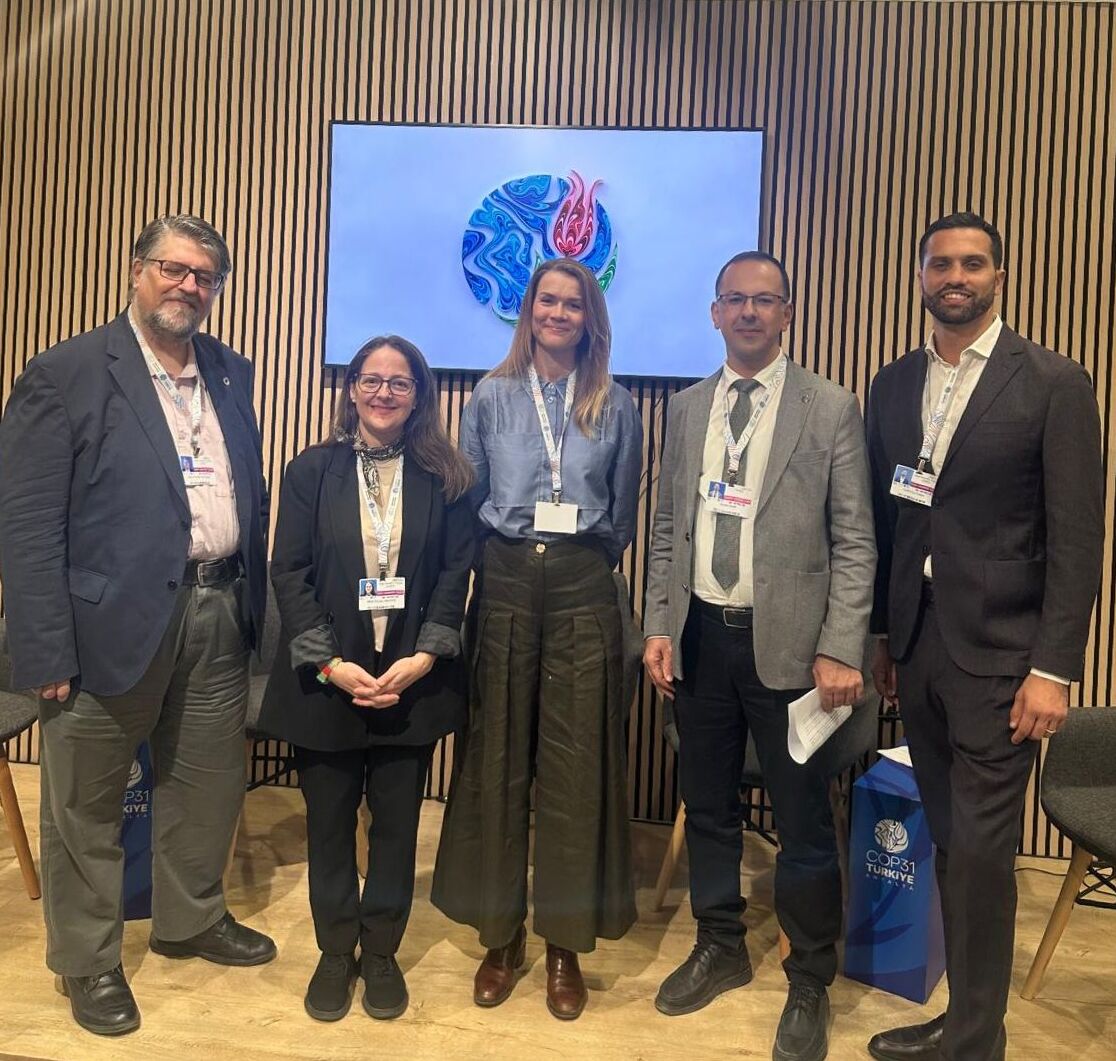
At the international panel organized under the leadership of Hacettepe University as part of COP31, the shared responsibilities of public authorities, industry, hospital management and clinical practice in measuring and reducing the environmental impact of healthcare systems were discussed.
The international panel, titled “The Invisible Footprint: Measuring What Health Systems Don't See,” was held on 9 November 2026 at the Blue Zone Türkiye Academy during the United Nations Climate Change Conference (COP31) in Antalya.
The panel addressed the responsibilities of public authorities, the health technology and pharmaceutical industries, hospital management and clinicians. Key topics included measuring carbon footprints, sustainable hospital practices, life cycle assessment and reducing unnecessary healthcare services. The importance of inter-institutional cooperation in building more sustainable healthcare systems was also emphasized.
The panel was moderated by Prof. Dr. Mine Durusu Tanrıöver, Director of the Vaccine Institute and Coordinator of Social Contribution at Hacettepe University. Discussions focused on the healthcare sector's contribution to climate change and concrete solutions for improving the environmental sustainability of healthcare services.
Can we manage what we cannot measure?
According to information shared during the panel, the healthcare sector is responsible for approximately 5% of global greenhouse gas emissions. While addressing the health impacts of climate change, the sector also faces the responsibility of reducing its own environmental footprint.
One of the key messages of the panel was that measuring the environmental impact of healthcare systems through standardized, reliable and comparable methods is essential for developing sustainability policies.
In her opening remarks, Prof. Dr. Durusu Tanrıöver emphasized the importance of making the environmental impact of healthcare services visible, noting that meaningful improvement targets cannot be established without measurement. She stated that carbon footprint measurement should be considered not merely a technical exercise but an integral part of the management and decision-making processes of healthcare systems.
International experts discuss solutions
Maria Gaden from the Centre for Sustainable Hospitals in Denmark highlighted the importance of institutional leadership, data-driven decision-making, resource management and healthcare staff engagement in translating hospital sustainability goals into everyday practices.
Jesús Rueda Rodríguez, Director General for Industrial Affairs and Strategies at MedTech Europe, representing the European medical technology industry, addressed the importance of measuring the environmental impact of medical devices and diagnostic technologies throughout their life cycle, from production and use to waste management. The discussion also explored how reliable and comparable data could contribute to the development of more sustainable healthcare technologies without compromising patient safety or quality of care.
Dr. Ludovico Furlanise, an Internal Medicine Specialist and member of the Choosing Wisely Working Group of the European Federation of Internal Medicine, highlighted that reducing unnecessary diagnostic and treatment procedures could both improve patient outcomes and reduce the environmental footprint of healthcare services.
Ahmet Conda, Climate Expert at the Directorate of Climate Change of the Ministry of Environment, Urbanization and Climate Change of Türkiye, discussed climate financing, public incentives and supportive policy mechanisms that could enable healthcare institutions to measure their environmental impact and implement emissions reduction measures.
Better healthcare, a healthier planet
One of the key discussions at the panel focused on redefining the concept of value in healthcare to encompass environmental sustainability.
According to the experts participating in the panel, reducing unnecessary tests, procedures and treatments has the potential not only to improve patient safety and quality of care but also to reduce energy, material and resource consumption. This approach demonstrates how high-value care and climate action can support and reinforce one another.
At the conclusion of the panel, it was emphasized that the environmental transformation of the healthcare sector can only be achieved through cooperation among public institutions, the health technology and pharmaceutical industries, hospitals, clinicians and universities.
Through this event held as part of COP31, Hacettepe University highlighted the role universities can play in combating climate change, not only as institutions that generate scientific knowledge but also as platforms that bring diverse stakeholders together and contribute to the transformation of healthcare systems.