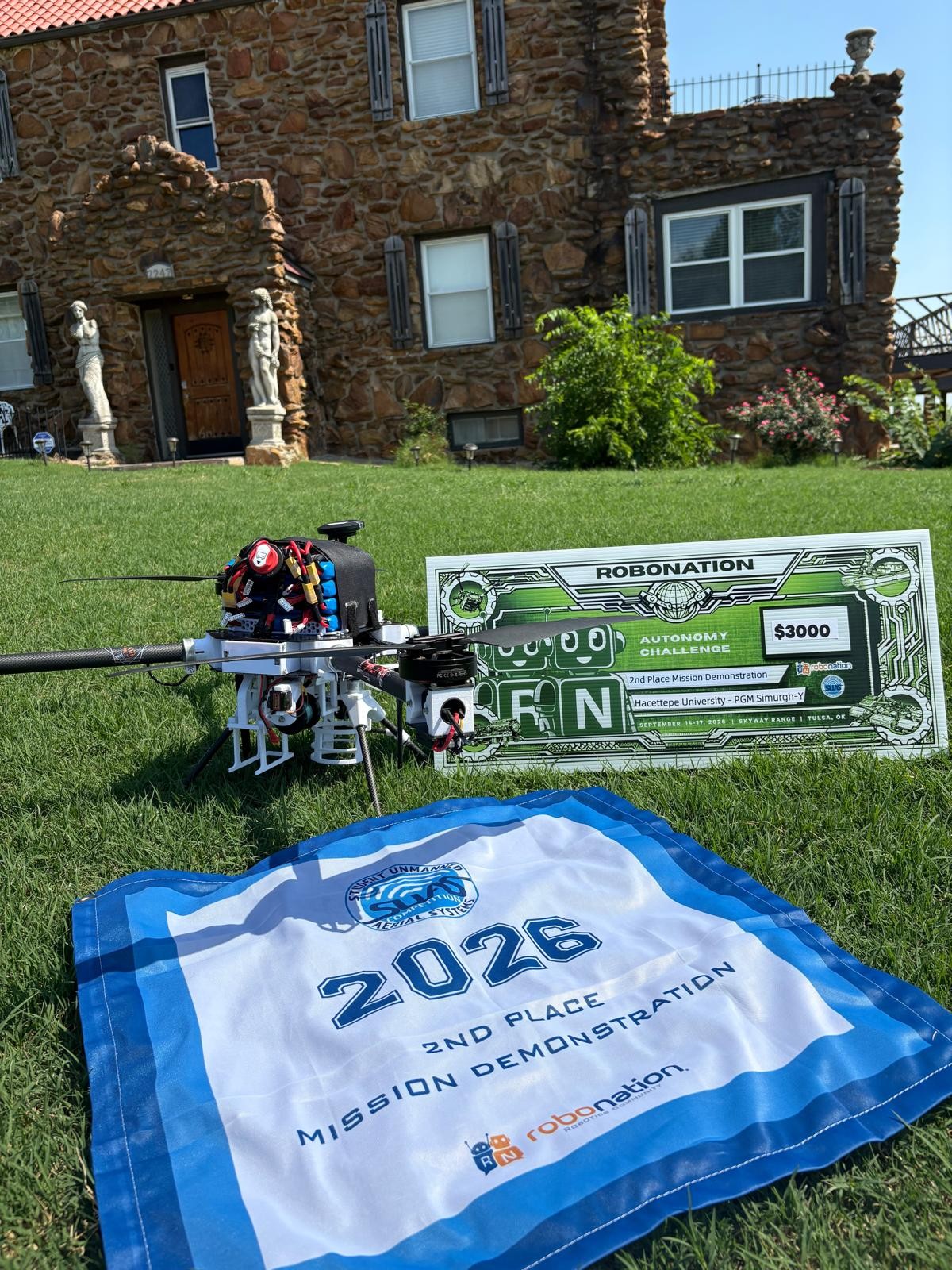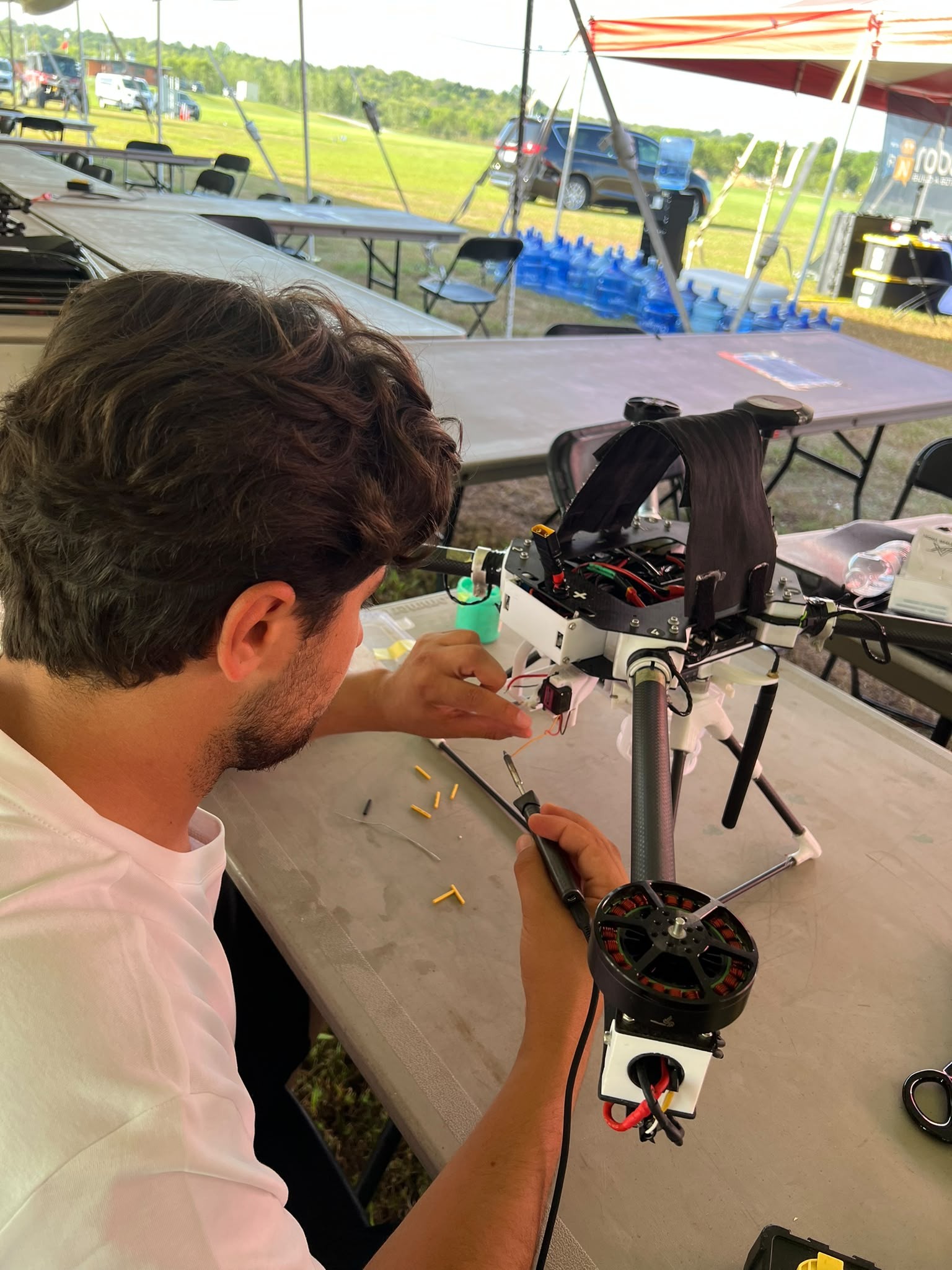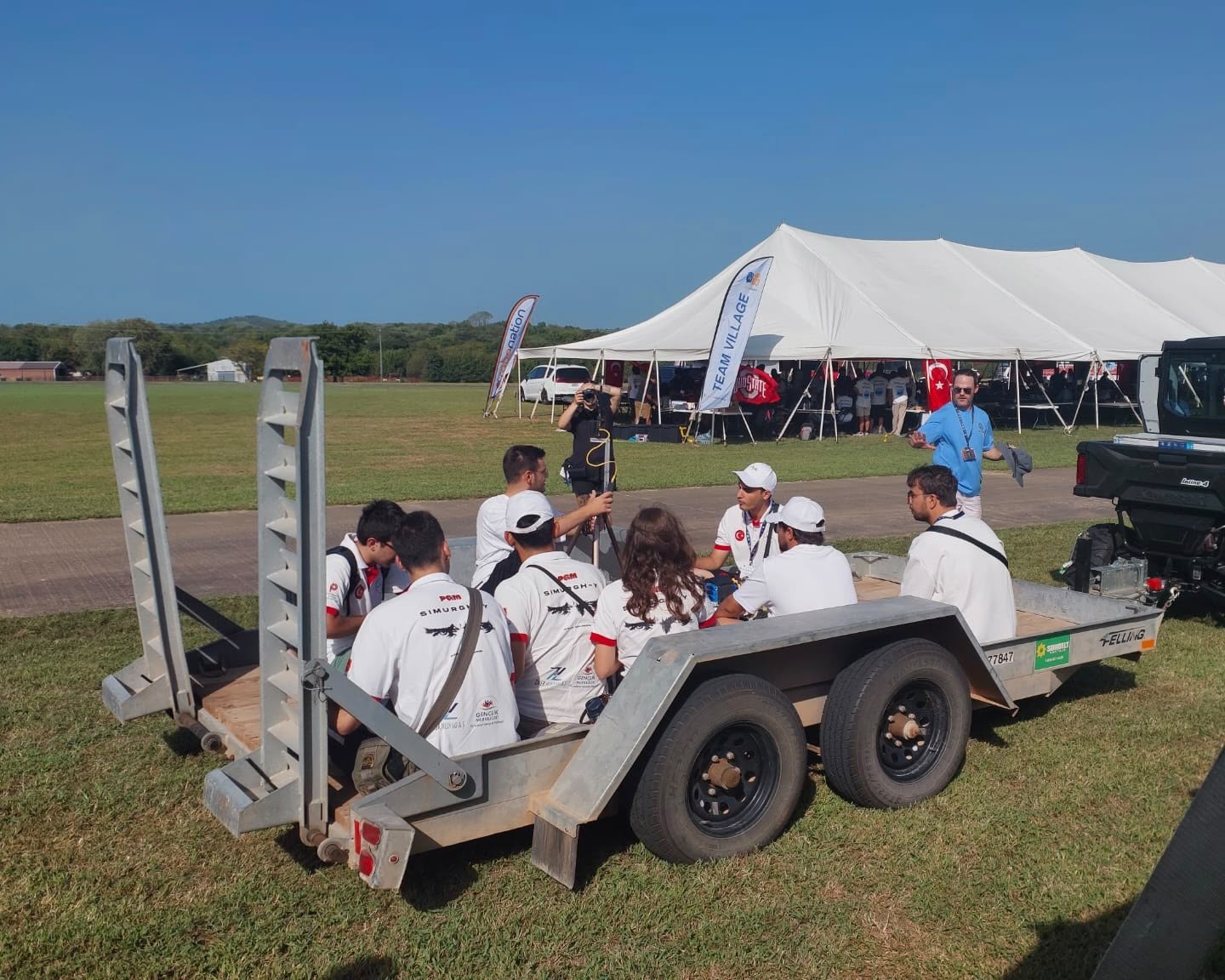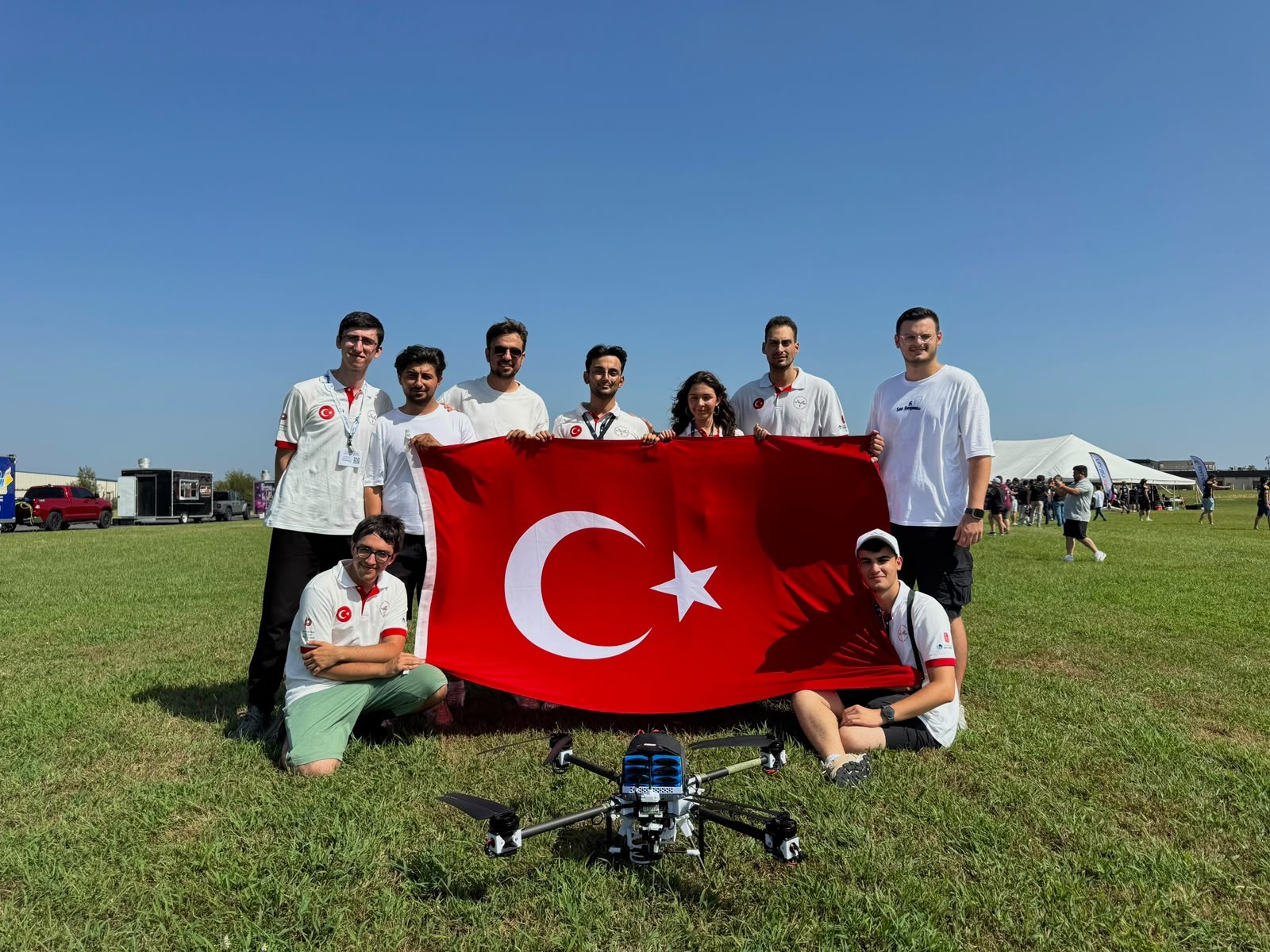
Our university students successfully represented Türkiye at the SUAS (Student Unmanned Aerial Systems) Competition, one of the world’s most prestigious unmanned aerial vehicle competitions, held on September 11–14, 2026, and became second in the world.
The SUAS (Student Unmanned Aerial Systems) Competition, one of the world’s most prestigious unmanned aerial vehicle organizations, is held annually in the United States by the AUVSI Seafarer Division and RoboNation.
The competition, held between September 11 and 14, 2026, at the Skyway Range facility in Tulsa, Oklahoma, focuses on university students developing fully autonomous UAV systems and successfully carrying out complex missions based on real-world scenarios.
The team of the project, brought to life through the joint efforts of students from different disciplines, includes Murat Yazan, team captain, Cahit Haberal, Utku Karslı, and Furkan Turhan from the Department of Electrical and Electronics Engineering at Hacettepe University; Berkay Sezer, Süleyman Mert Elaçmaz, and Cevher Balur from the Department of Mechanical Engineering; Ozan Ata Yalçınkaya, Naz Bayram, and Ayşenur Erva Şahin from the Department of Physics Engineering; Sena İlhan from the Department of Sociology; Mustafa Faidelibaş from the Department of Computer Engineering; and Arda Kılınç from the Department of Computer Engineering at Middle East Technical University (METU).
An AI-supported autonomous system is being developed
The Simurgh-Y project team, which includes students from Hacettepe University, shared the following information about the project:
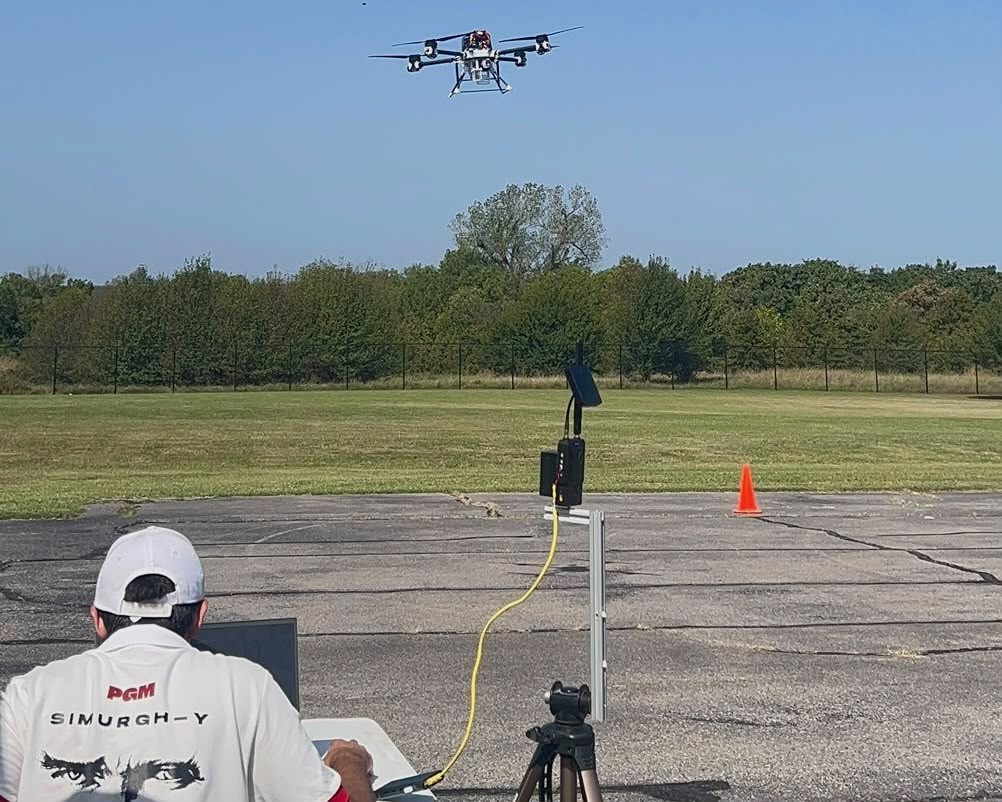
“In our project, we aim to develop an integrated UAV system capable of autonomous takeoff, navigation, target detection, and safe landing without human intervention. The aircraft designed within the scope of the project follows the coordinates predetermined in the competition area without violating the virtual flight boundaries, detects dynamic and static obstacles during the flight through live data streams, and can autonomously change its route.
At the same time, it can detect the color and shape of the targets placed in the search area, the letters or symbols on them, and their exact GPS coordinates through AI-supported image processing algorithms.
At the most critical stage of the mission, the UAV moves autonomously at a flight altitude of 20 to 65 meters and delivers the humanitarian aid package precisely to the center of the target through the mechanical release system on board.”
According to the official results of the 2026 Autonomy Challenge, the Simurgh-Y team achieved “2nd Place Mission Demonstration,” namely Second Place in the World in Mission Demonstration, with its high performance in challenging flight missions on the international arena, and became the recipient of the $3,000 achievement award.
The project team stated that the achievement was an important success for them and said:
“This achievement demonstrates our engineering capabilities in the fields of autonomous navigation, image processing, and payload delivery at the international level.”