
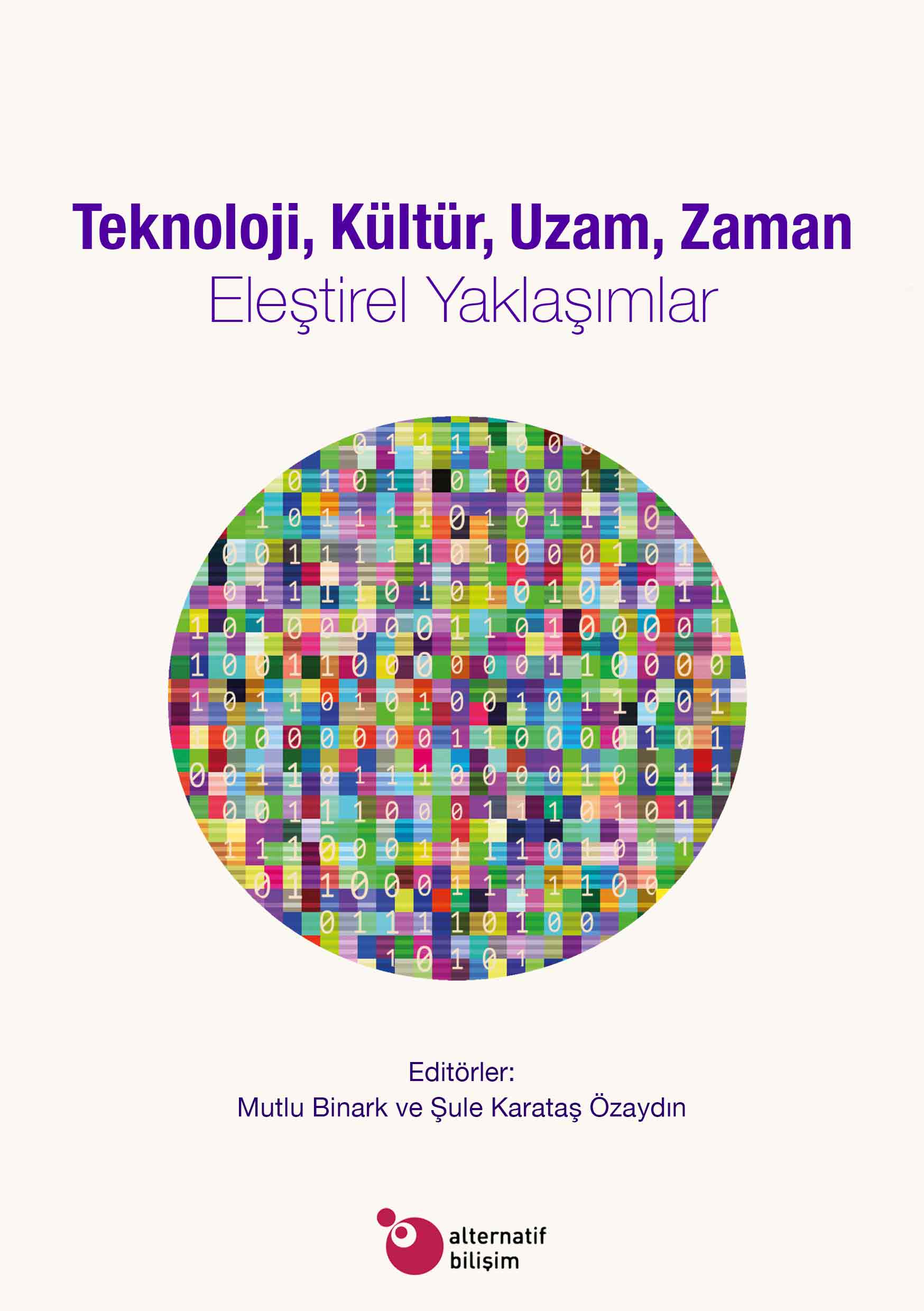
The book titled "Technology, Culture, Space, Time: Critical Approaches", edited by Prof. Dr. Mutlu Binark (Faculty of Communication, Department of Radio, Television, and Cinema) and Res. Asst. Dr. Şule Karataş Özaydın (Department of Communication Sciences) , was published as an e-book in January 2026 by the Alternative Informatics Association (Alternatif Bilişim Derneği) under an open science and open access policy.The collective work features contributions from the following scholars and researchers: Res. Asst. Hakan Soner Şener (Department of Communication Sciences),Umur Yıldırım (PhD Candidate, Department of Communication Sciences), Pelin Büyükgaga Birlik (PhD Candidate, Department of Sociology), Res. Asst. Esra Özgür (Ankara University, Faculty of Communication), Res. Asst. Yankı Özcan (Başkent University, Faculty of Communication), Res. Asst. Aybüke Doğan (ASBÜ, Faculty of Communication), Semih Öz (PhD Candidate, Ankara University, Department of Public Relations), Hakan Erdal (PhD Candidate, Ankara University, Department of Radio, Television, and Cinema).
Taken as a whole, the articles in this volume trace the shifting conditions of modernity through the intertwined lenses of technological transformation and social experience. From Mumford’s humanist critique of machine ideology to Crary’s reflections on vision and temporality in late capitalism, each chapter demonstrates that the relationship between humans and technology is never merely instrumental, but rather existential and political.
A common theme resonates throughout these analyses: the search for meaning, agency, and political orientation in an era of acceleration and abstraction. The thinkers assembled here remind us that the crisis of modernity is defined not only by technological excess but also by the erosion of resonance, community, and depth. Yet, within this crisis lies the possibility of renewal; thus, thinking critically about technology necessitates rethinking how we live, perceive, and connect. This book invites readers to immerse themselves in these reflections slowly, deliberately, and with a renewed awareness of the temporal, spatial, and cultural worlds we inhabit.
The contributions in this collection discuss communication and critical theorists—whose work is often not granted sufficient scientific depth in Turkish academic literature—at the intersection of technology, culture, time, and space. Simultaneously, the project served as an occasion for knowledge producers to act in concert and generate collective intelligence. The collaborative evaluation of theorists and the mutual interdependence of production slowed the pace of the work. However, the stance of the contributors against the "speed" that defines the zeitgeist was rooted in a commitment to collective production and an openness to the process of relearning. In an age where datafication influences everything from personal "likes" to the affective bonds we form with our social environment, it is crucial to discuss the role of new communication tools in shaping our perception of time and space. By engaging with the works of Mumford, Ellul, Postman, Meyrowitz, Carey, Poster, Han, Rosa, and Crary, the volume highlights the historical continuity of contemporary phenomena and problems. Notably, the chapters address the adverse effects of accelerating time and contracting (or hyper-accessible) space on the human imagination, cognition, storytelling, social solidarity, and moral values.
All discussions and theoretical inquiries are available via open access through primary sources.
ISBN: 978-605-74852-9-8
You can click for access link.