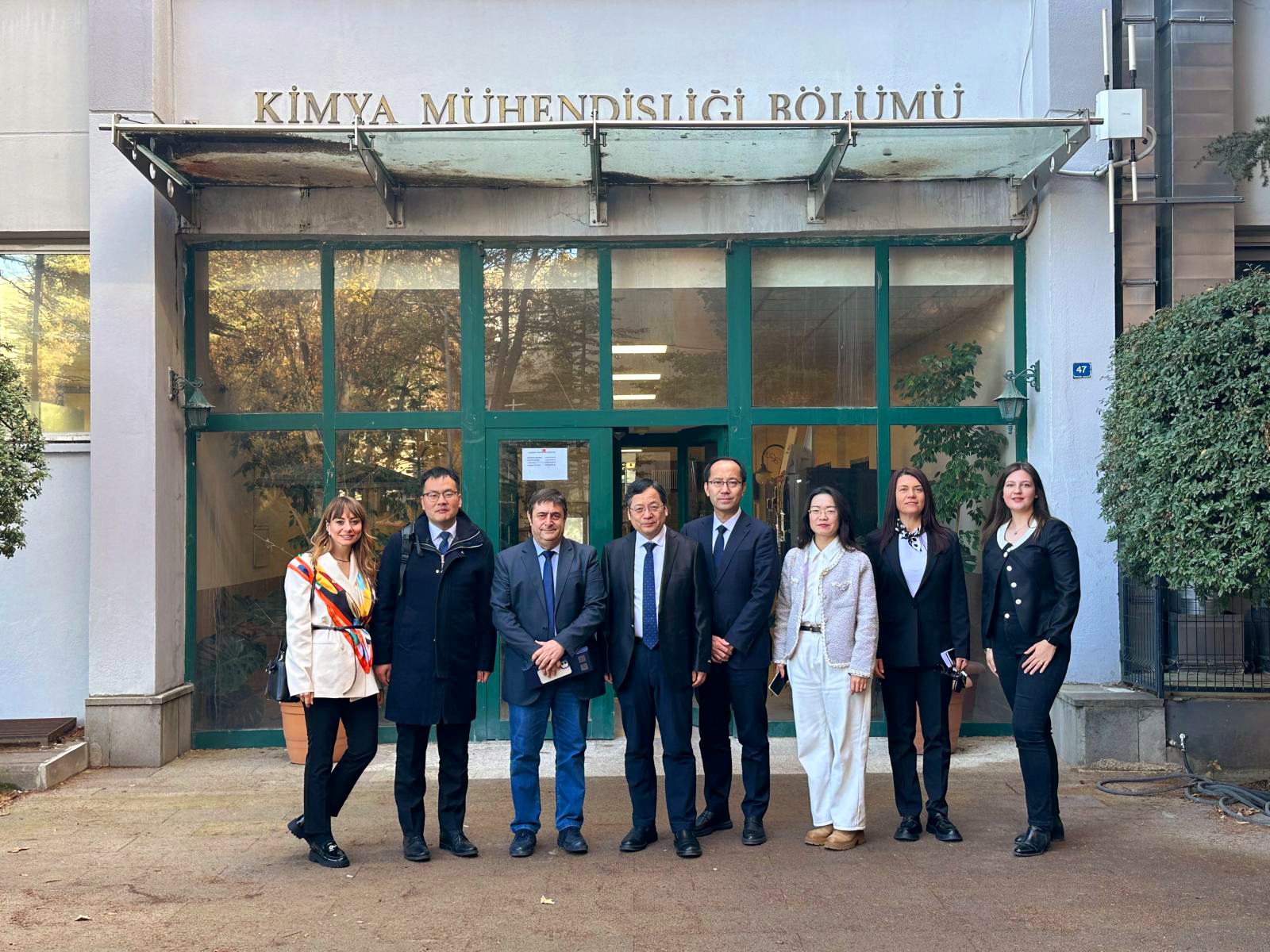
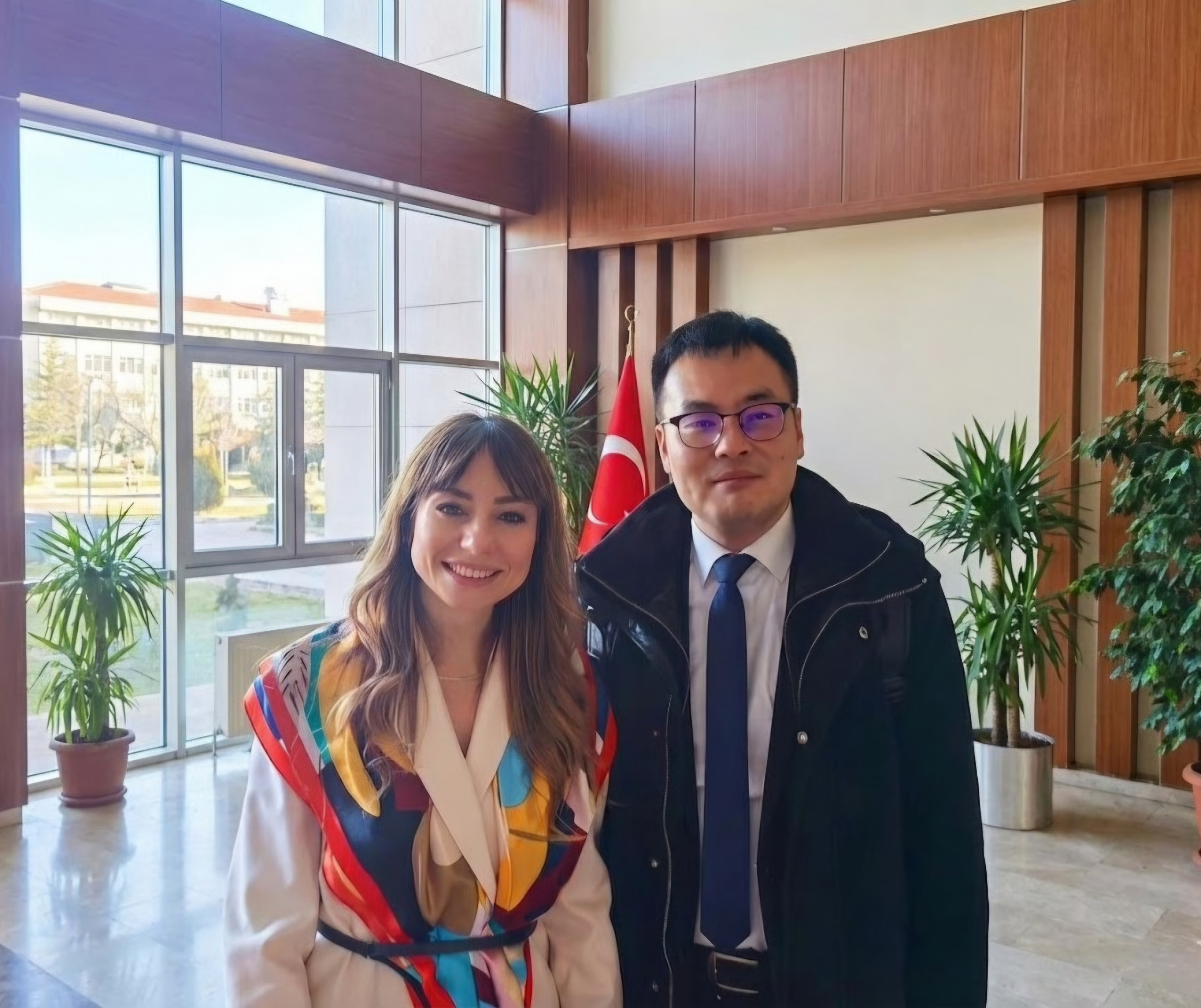
A memorandum of understanding was signed on December 12 between Hacettepe University and the visiting delegation from the Beijing Institute of Technology (BIT) to institutionalize the existing TÜBİTAK-NFSC-supported collaboration on carbon capture technologies. During the meetings chaired by our university's Rector, Prof. Dr. Mehmet Cahit Güran, the determination to develop joint education programs and scientific outputs with BIT, one of China's institutions with the highest research budgets, was emphasized.
The academic collaboration between our university's Department of Chemical Engineering and BIT, which was initiated with a TÜBİTAK–NSFC-supported joint research project in the field of carbon capture technologies, which is of global importance, was further strengthened by being transferred to an institutional framework with the Memorandum of Understanding (MoU) signed during the delegation visit on December 12. This visit represents an important step towards developing sustainable, long-term, and high-value scientific collaborations between the two universities. Based on the CO2 capture systems project, which began in January 2025 and will last for three years, this partnership aims to deepen academic interaction by combining the complementary expertise of the two universities.
The meeting, chaired by our Rector Prof. Dr. Mehmet Cahit Güran, was attended by Vice Rector Siping Pang from the BIT delegation, Deputy Director of the Institute of Science and Technology Research Wei Yang, and Prof. Dr. Lei Zhang and Prof. Dr. Helei Liu from the Faculty of Chemical Engineering. Representing our university at the meeting were our Vice Rector Prof. Dr. Şahap Armağan Tarım and Prof. Dr. Süleyman Ali Tuncel, Prof. Dr. Hülya Yavuz Ersan, Assoc. Prof. Dr. Özge Yüksel Orhan, and Research Assistant Neslişah Ulus from our Chemical Engineering Department. Representatives from the International Relations Coordination Office and the European Union Coordination Office also participated in the meeting.
Our Rector, Prof. Dr. Mehmet Cahit Güran, expressed his pleasure at hosting the delegation and provided information about our university's education and research infrastructure. BIT Vice Rector Siping Pang thanked him for the reception and emphasized that their university ranks among the top 200 in international rankings and is one of the universities with the highest research budget among higher education institutions in China. Siping Pang continued: “We wish to expand the cooperation initiated through our Department of Chemical Engineering to the entire university, and in this context, we have a strong commitment to developing joint education programs and producing scientific outputs of international quality.”
Research Collaboration and the Process Leading to the MoU
The academic collaboration that formed the basis of the visit was established within the scope of the TÜBİTAK–NSFC (China) Bilateral Collaboration Project, led by Assoc. Prof. Dr. Özge Yüksel Orhan from our Department of Chemical Engineering and Prof. Dr. Helei Lıu from the Department of Chemical Engineering at the Beijing Institute of Technology on the Chinese side. The project, which began on January 1, 2025, and will continue for three years, focuses on the development of low-energy consumption and innovative CO2 capture and catalytic desorption systems. The project aims to address the fundamental challenges faced by chemical absorption-based carbon capture technologies in terms of efficiency and energy consumption by developing original approaches in the areas of absorbent design, catalytic desorption, and process integration. The project, carried out by combining the complementary expertise and research infrastructure of our university and IBT in this field, contributes significantly to deepening scientific cooperation between the two universities, and this strong academic interaction provides a solid foundation for signing the Memorandum of Understanding.
Following the visit to the Rectorate, the BIT delegation visited the Department of Chemical Engineering and related research laboratories to learn about the work being carried out. The program concluded after the laboratory visits.
.jpeg)
.jpeg)