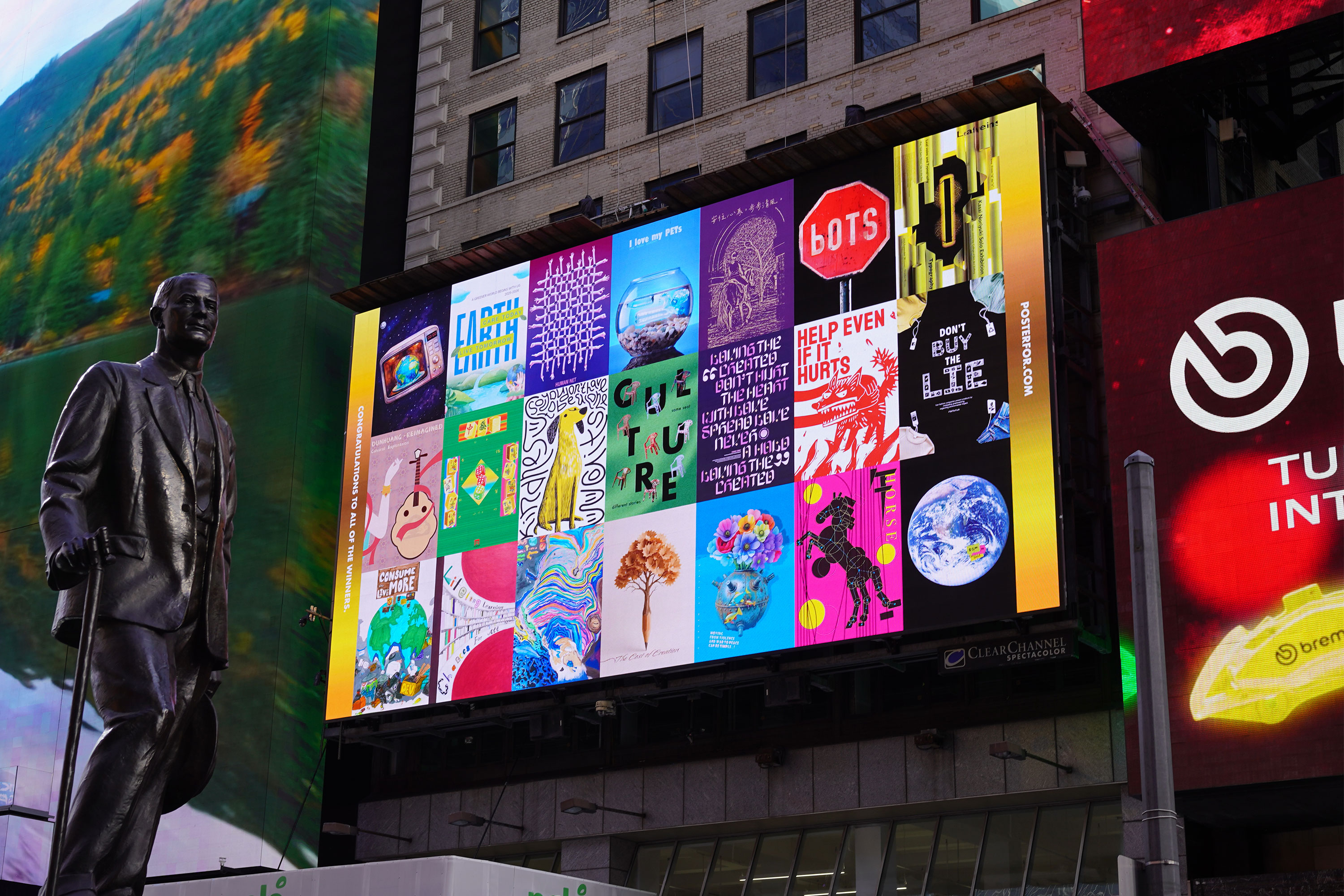
Research Assistant Talha Akçay from the Graphic Design Department of Hacettepe University's Faculty of Fine Arts had his typography-focused work exhibited in Times Square, New York, one of the world's most important public spaces. Drawing inspiration from the Anatolian Sufi tradition, this work achieved global visibility for a local cultural reference.
Talha Akçay's work was awarded the Rose Gold Award in the Culture category as part of PosterFor 2025 – 4th Edition Season 2. Commenting on the significance of the award, which was recognized by an international jury, Research Assistant Akçay said, "The project demonstrated that culturally-based design can carry a depth of thought beyond aesthetic performance. This award demonstrates that a research-based production approach finds resonance in an international context."
Traces of Anatolia in America
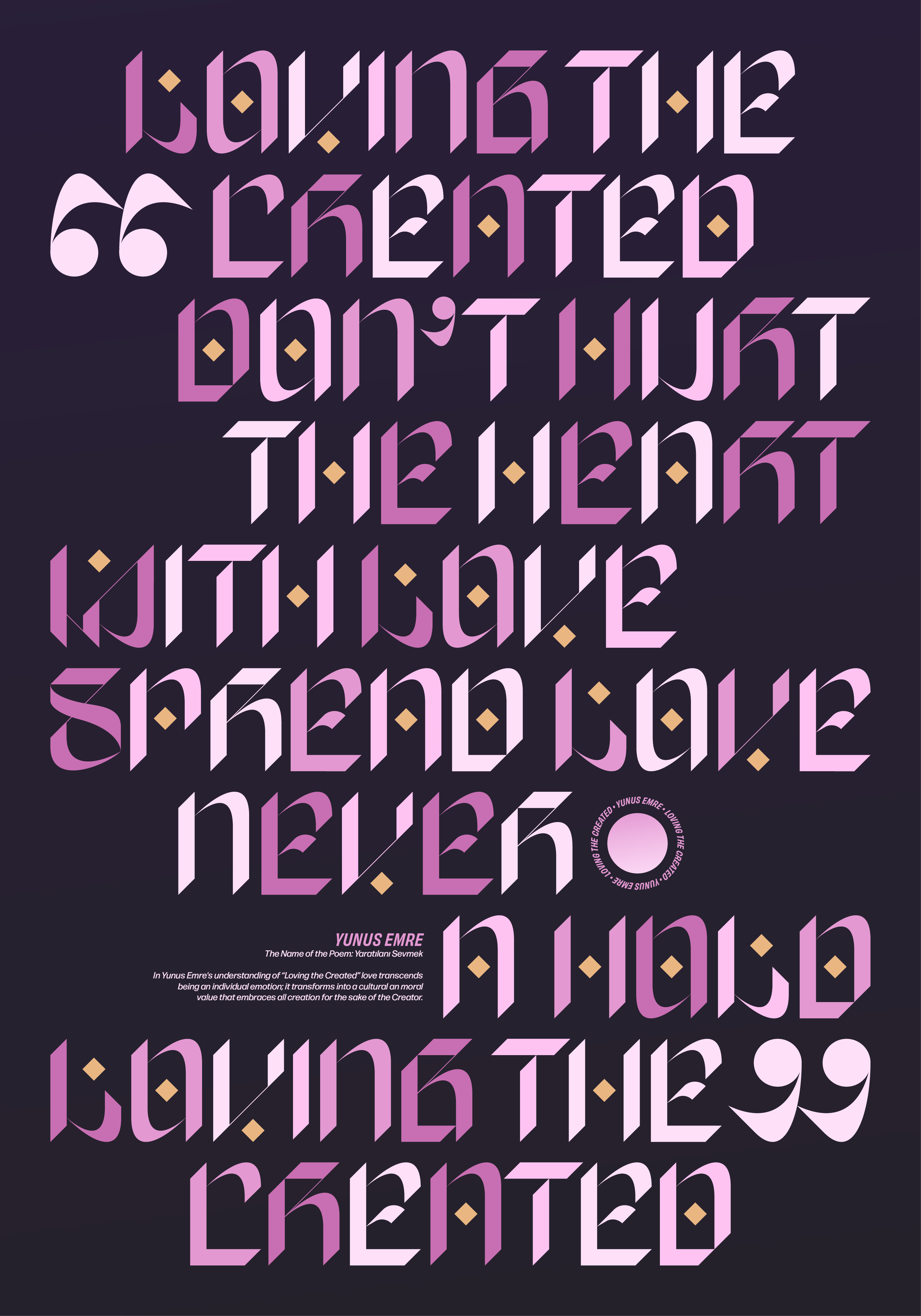
Research Assistant Akçay made the following comments about the design, which was inspired by the concept of “Let us love and be loved” from Yunus Emre, one of the important figures of the Anatolian Sufi tradition:
"This phrase, which has remained alive for centuries, is treated in the work not so much as a romantic call, but rather as a suggestion of reciprocity, unity, and an ethical relationship. In the design, the concept of love is interpreted as a search for orientation and wholeness rather than an abstract emotion. The relationship between letter form, space, and rhythm creates a second narrative layer in the design. Space refers to inner orientation and stillness, while rhythm represents continuity that supports the idea of unity. Thus, the design surface becomes not only something to be read but also something to be experienced. The custom typeface developed in this work establishes a balanced relationship between traditional calligraphic understanding and contemporary typography. Rather than directly reproducing historical forms, it focuses on reinterpreting the underlying intellectual discipline within a contemporary structure. This approach allows the work to transcend superficial cultural representation and gain conceptual depth.
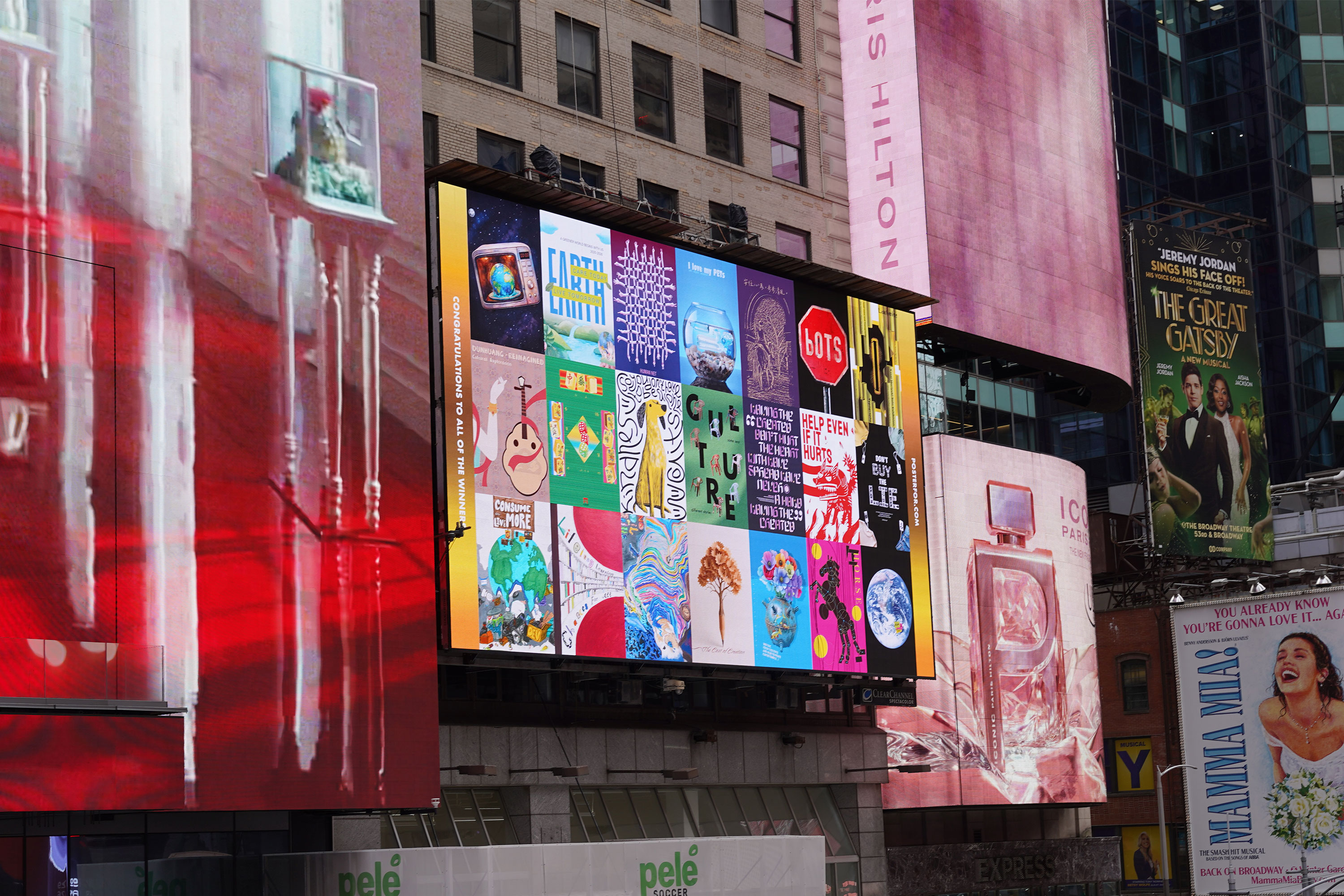
An important development in our university's visibility on international platforms
In his assessment of the work, Talha Akçay emphasized that design is not merely an aesthetic field of production, stating, “Typography is not a passive tool at the service of text for me; it is the spatial organization of meaning. If the letter form is thought of as a body, space is its breath; rhythm is its movement through time.”
Akçay noted that the work's success in bringing a local idea into a global circulation space demonstrates that cultural production cannot be reduced to a one-way center-periphery relationship, and that the work shows how a local Sufi saying can gain new meaning on a global surface. Emphasizing that he approaches typography not merely as a visual arrangement practice but as a conceptual field where thought is constructed on a material surface, Akçay assessed this development as significant in the context of the visibility gained by the academic and design-based studies conducted within the Graphic Design Department of Hacettepe University's Faculty of Fine Arts on international platforms.